
 By
By 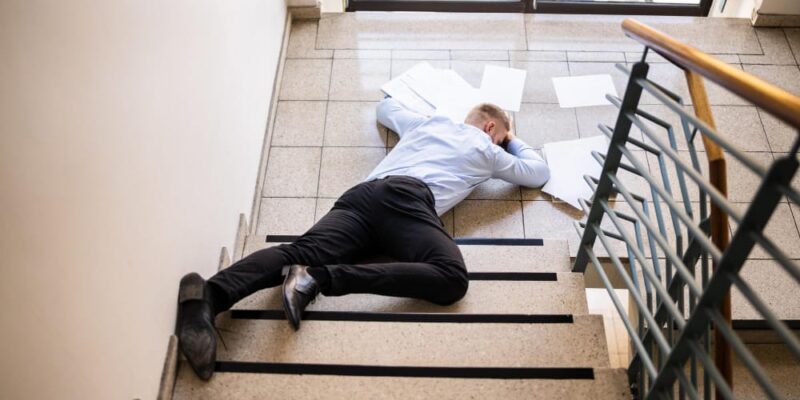
The fall itself takes less than a second. You step off the curb in a parking garage and your foot catches on a chunk of broken concrete you never saw. You walk up the stairwell in your apartment building and a loose handrail comes away in your hand. By the time the paramedics arrive, the question is not just whether you are hurt, but whether anyone can be held responsible. Common-area falls are some of the most contested premises liability cases in New Jersey, because the property owner and the management company tend to point fingers at each other, the maintenance records go missing, and the surveillance footage gets overwritten on a 30-day loop. At The Law Offices of Anthony Carbone, we have handled these cases across Hudson County since 1988, and the difference between a settled claim and a dismissed one usually comes down to what happens in the first two weeks.
What “Common Area” Means in New Jersey
Common areas are the parts of a multi-unit property that are shared by tenants, guests, and visitors rather than confined to a single unit. The category covers:
- Parking lots and parking garages
- Stairwells, hallways, and elevators
- Lobbies and laundry rooms
- Walkways, courtyards, and shared outdoor spaces
- Rooftop decks and shared amenity floors
Responsibility for these spaces sits with the landlord, the condominium association, or the property management company, not the individual tenants. That distinction matters because the duty of care attaches to whoever controls the area, and the lease language rarely shifts that responsibility onto a tenant.
The controlling principle comes from a line of New Jersey cases including Hopkins v. Fox & Lazo Realtors and Brown v. Kennedy Memorial Hospital, which set out the duty of reasonable care for common areas in commercial and multi-unit residential properties.
The Standard the Owner Has to Meet
Property owners owe invitees a duty to inspect for hazards, address dangerous conditions within a reasonable time, and warn of conditions that cannot immediately be fixed. The standard breaks down into three practical questions a jury usually has to answer:
- Did the owner actually know about the hazard
- Should the owner have known about the hazard through reasonable inspection
- Did the owner have enough time to fix it or warn about it before the fall
Each prong has its own evidence trail. Actual notice comes from maintenance requests, prior complaints, or incident reports involving the same condition. Constructive notice comes from how long the hazard existed, often established by photos, witness statements, or building inspection records. The time-to-fix analysis depends on the nature of the defect and the building’s normal response patterns.
Parking Garage Falls: The Issues That Recur
Parking garages combine vehicles, pedestrians, low light, and concrete in ways that produce specific hazards:
- Oil and fluid leaks that pool on smooth concrete
- Wheel stops placed in unexpected positions or painted to blend into the surface
- Cracked, heaved, or spalling concrete from freeze-thaw damage
- Inadequate lighting in stairwells and pedestrian crossings
- Missing or worn striping on ramps and walkways
- Standing water near drainage failures
The structural condition of a Jersey City garage matters because most are decades old and subject to salt damage from winter de-icing. Engineering reports, inspection records, and prior repair invoices become central evidence. A garage that failed a structural inspection two years before your fall is much harder to defend than one with current certifications.
Lighting as an Independent Cause of Action
A fall that happens in poorly lit conditions can be pursued not just as a tripping hazard case but as an inadequate lighting case. Building codes require specific footcandle levels in stairwells, parking areas, and means of egress. A light meter reading taken shortly after the incident, paired with code requirements, often gets cited in the expert reports that drive settlement.
Apartment Stairwell Falls: The Code Question
Stairwell cases live or die on building code compliance. New Jersey adopts the International Building Code with state-specific amendments, and stairwells are one of the most heavily regulated parts of any structure. Common code violations that lead to falls include:
- Risers and treads of inconsistent height or depth
- Handrails missing, mounted at the wrong height, or extending the wrong distance past the top and bottom steps
- Inadequate stairwell lighting or non-functional emergency lighting
- Worn nosings without proper visual contrast
- Carpeting that has lifted or buckled at the edges
- Drainage failures that allow water to pool on landings
A retired code official or licensed engineer typically inspects the stairwell, measures the deficiencies, and produces a report tying the violation to the fall. That report is the spine of the case.
The dimensional tolerances are tight. The maximum allowed variation between riser heights on a single staircase is three-eighths of an inch. A staircase where two risers vary by half an inch is a code violation on its face, and the variation alone is enough to disorient someone walking at normal pace.
Evidence That Disappears Quickly
Common-area fall cases require fast investigation because the evidence has a short shelf life:
- Surveillance footage in most Hudson County buildings is overwritten on a 14-to-30 day cycle
- Maintenance and repair records can be edited, lost, or “not located” once litigation begins
- Witnesses, including neighbors and delivery workers, move or stop responding
- The dangerous condition itself gets repaired, often within days of the incident
- Weather data, lighting levels, and physical measurements become harder to reconstruct
Preservation letters need to go out to the property owner, the management company, the maintenance contractor, and any security firm responsible for the building. The letters demand that all relevant records and footage be retained, and they put the defendants on notice that destruction of evidence carries legal consequences under New Jersey spoliation doctrine.
How The Law Offices of Anthony Carbone Builds These Cases
The firm’s approach to common-area falls is built around early evidence preservation and expert support:
- Site inspection with measurements, photographs, and light meter readings within days of the incident
- Subpoenas for surveillance, maintenance logs, prior incident reports, and inspection records
- Identification of every potentially liable party, including the owner, management company, and outside maintenance contractors
- Retention of building code experts, biomechanical engineers, or accident reconstruction specialists when the case warrants
- Coordination with the insurance carriers under New Jersey’s general liability framework
The firm’s premises liability page and Jersey City slip and fall coverage provide more background. The New Jersey Department of Community Affairs also publishes the current adopted version of the building code, which is useful for understanding what was required at the time the building was constructed or last renovated.
A fall in a parking garage or apartment stairwell is not the kind of case to handle alone. The defenses are well rehearsed, the evidence vanishes quickly, and the difference between a code violation that supports your claim and a routine “watch your step” disclaimer often hinges on details only an experienced premises liability attorney would catch. The Law Offices of Anthony Carbone offers a free consultation to inspect the location, review your medical records, and identify every party with potential responsibility. Call 201-963-6000 before the camera loop resets and the maintenance log gets rewritten.








Comments